Can You Stop Taking GLP-1? What Happens After You Stop | Ryn
Can you stop taking GLP-1 medication? Learn what happens after stopping semaglutide or tirzepatide, whether weight regain is common, and how to maintain your results safely.
Can You Stop Taking GLP-1? What Happens After You Stop Treatment?
Introduction
GLP-1 medications like semaglutide and tirzepatide have helped millions of people lose weight by reducing appetite, improving fullness after meals, and making it easier to maintain a calorie deficit.
For many patients, these medications can produce life-changing results.
But once the weight starts coming off, another question often follows:
"Can I stop taking GLP-1?"
It's a reasonable concern.
Some people want to stop because they've reached their goal weight. Others worry about long-term medication use, side effects, or cost. And many simply wonder whether they'll keep the weight off without continuing treatment.
The answer isn't always simple.
Some people are able to stop GLP-1 medication successfully with a carefully planned maintenance strategy, while others may notice their appetite returning and begin regaining weight over time. The outcome depends on several factors, including your overall health, lifestyle habits, weight-loss goals, and how your healthcare provider manages your treatment.
Understanding what happens after stopping GLP-1 medication can help you make informed decisions and avoid common mistakes that may affect your long-term success.
In this guide, you'll learn:
Whether you can safely stop GLP-1 medication
What happens to your appetite after stopping treatment
Whether weight regain is common
How to reduce the risk of regaining weight
When stopping may be appropriate
Why ongoing medical guidance matters
If you're new to GLP-1 therapy, you may also find these guides helpful:
Quick Answer
Yes, you can stop taking GLP-1 medication, but you should only do so under the guidance of a licensed healthcare provider.
Many people experience an increase in appetite after stopping treatment, and some regain part or all of the weight they lost if healthy lifestyle habits and long-term weight management strategies are not maintained.
Stopping GLP-1 medication does not automatically mean you'll regain weight, but having a structured maintenance plan significantly improves your chances of long-term success.
Why People Want to Stop GLP-1 Medication
There are many reasons someone may consider stopping treatment.
For some, the decision comes after successfully reaching a healthier weight. Others may experience side effects that become difficult to manage, while some are concerned about the long-term cost of treatment or changes in insurance coverage.
Common reasons include:
Reaching a target weight
Medication cost
Insurance no longer covering treatment
Pregnancy planning
Side effects
Personal preference
Difficulty accessing medication
Feeling confident maintaining weight without medication
Each of these situations deserves an individualized discussion with a healthcare provider rather than an abrupt decision to stop treatment.
Because obesity is considered a chronic medical condition, weight management often requires a long-term approach, much like managing high blood pressure or diabetes.
What Happens When You Stop Taking GLP-1?
GLP-1 medications work by influencing hormones that help regulate hunger, fullness, and blood sugar.
While you're taking the medication, many people notice:
Reduced appetite
Feeling full sooner
Fewer food cravings
Better portion control
Slower stomach emptying
When the medication is discontinued, these effects gradually lessen.
That doesn't happen overnight.
Instead, your body slowly returns to functioning without the medication's support.
Over the following weeks or months, you may notice:
Hunger returning more often
Larger portion sizes
Increased cravings
Less satisfaction after meals
More frequent snacking
These changes can make maintaining previous weight-loss habits more challenging.
This is one reason healthcare providers often emphasize building sustainable nutrition, exercise, and behavioral habits throughout treatment—not just relying on medication alone.
Does Everyone Gain Weight After Stopping GLP-1?
No.
This is probably the biggest misconception surrounding GLP-1 medications.
Some people maintain most of their weight loss for years.
Others regain a portion of the weight they lost.
And some regain nearly all of it.
The difference often comes down to what happens after treatment ends.
People who continue healthy eating patterns, remain physically active, prioritize sleep, and receive ongoing medical or nutritional support generally have a better chance of maintaining their results.
Those who return to previous eating habits or stop monitoring their weight may find it more difficult to keep the weight off.
Research has shown that weight regain after discontinuing GLP-1 therapy is common, but it is not inevitable.
Long-term success depends on creating lasting lifestyle changes that continue after medication ends.
Why Weight Regain Can Happen
GLP-1 medications do not permanently change the body's natural appetite regulation.
Instead, they help manage biological signals while treatment continues.
After stopping medication, several things may happen:
Hunger hormones become more active.
Appetite gradually increases.
Daily calorie intake may rise.
Food cravings can return.
Maintaining a calorie deficit becomes more difficult.
This doesn't mean the medication "stopped working."
It simply means your body is no longer receiving the same hormonal support.
For many people living with obesity, these biological processes existed before treatment began, which is one reason obesity is recognized as a chronic disease rather than simply a lack of willpower.
Understanding this can help reduce frustration and encourage long-term planning rather than viewing GLP-1 medication as a temporary quick fix.
Can You Keep the Weight Off?
Yes.
Many people successfully maintain their weight after stopping GLP-1 medication.
However, doing so usually requires an intentional maintenance strategy rather than hoping the weight stays off on its own.
Healthcare providers often recommend focusing on several key habits before stopping treatment.
These include:
Continuing a balanced, protein-rich diet
Maintaining regular physical activity
Strength training to preserve lean muscle
Monitoring weight regularly
Getting enough sleep
Managing stress
Scheduling periodic medical follow-up
The goal is to transition from medication-supported weight loss to lifestyle-supported weight maintenance.
For some people, this transition happens smoothly.
For others, continuing medication longer—or using a lower maintenance dose—may be the better option depending on their medical history and individual goals.
Is It Better to Stop Suddenly or Gradually?
The best approach depends on the medication you're taking, your health history, and your provider's recommendations.
In many cases, providers prefer a planned transition rather than making changes without medical advice.
During follow-up visits, your provider may discuss:
Whether you've reached a stable weight
Your eating habits
Physical activity levels
Side effects
Overall health improvements
Long-term weight maintenance goals
These conversations help determine whether continuing, adjusting, or stopping treatment is the most appropriate next step.
Making medication decisions together with your healthcare provider helps ensure the safest and most effective long-term outcome.
When Might a Provider Recommend Staying on GLP-1 Longer?
For some people, stopping GLP-1 medication after reaching a goal weight may be appropriate.
For others, continuing treatment may provide the best chance of maintaining long-term health improvements.
Healthcare providers may recommend continuing GLP-1 therapy if:
You are still losing weight safely.
Your BMI remains in the obesity range.
You have type 2 diabetes or prediabetes.
Weight-related conditions have improved while taking medication.
Previous attempts to maintain weight without medication were unsuccessful.
Your appetite returns quickly after lowering the dose.
Obesity is increasingly recognized as a chronic disease, similar to high blood pressure or high cholesterol. Because of this, some patients may benefit from longer-term treatment rather than viewing GLP-1 medication as a short-term solution.
The decision should always be individualized and based on your medical history, treatment goals, and overall health.
Can You Restart GLP-1 Medication Later?
Yes.
If you've stopped taking GLP-1 medication and later begin regaining weight or your healthcare needs change, your provider may recommend restarting treatment.
However, restarting isn't always as simple as picking up where you left off.
Depending on how long you've been off the medication, your provider may recommend:
Starting again at a lower dose.
Slowly increasing the dose over several weeks.
Reviewing any new medications or health conditions.
Monitoring for side effects as your body readjusts.
Following the prescribed dosing schedule helps reduce the risk of side effects such as nausea or digestive discomfort.
If you're considering restarting treatment, it's best to speak with a licensed healthcare provider rather than restarting medication on your own.
Lifestyle Habits Become Even More Important
Medication can support weight loss, but long-term success often depends on the habits developed during treatment.
Many providers encourage patients to view GLP-1 therapy as an opportunity to build sustainable routines that continue long after medication is stopped.
Important habits include:
Eating enough protein at each meal.
Including fruits, vegetables, and high-fiber foods.
Staying physically active most days of the week.
Strength training to preserve muscle mass.
Drinking enough water.
Prioritizing quality sleep.
Managing stress.
Attending regular follow-up appointments.
These habits help support appetite regulation, preserve lean body mass, and improve overall metabolic health.
People who establish these behaviors while taking GLP-1 medication often feel more prepared if they later decide to discontinue treatment.
How to Talk to Your Healthcare Provider Before Stopping
If you're thinking about stopping GLP-1 medication, don't feel like you have to make the decision alone.
A conversation with your healthcare provider can help you understand the potential benefits and risks based on your individual health.
Questions you may want to ask include:
Have I reached a healthy weight?
Is now a good time to stop treatment?
What signs should I watch for after stopping?
Should my nutrition or exercise plan change?
How often should I monitor my weight?
Would a lower maintenance dose be appropriate?
If I regain weight, what are my options?
Having a plan before stopping medication can make the transition much smoother.
What If You're Worried About Cost?
Cost is one of the most common reasons people consider stopping GLP-1 medication.
If affordability is becoming a concern, talk with your provider before discontinuing treatment.
Depending on your situation, they may discuss:
Stopping treatment without discussing these options may increase the likelihood of regaining weight or interrupting your progress.
Long-Term Weight Maintenance Is the Goal
One of the biggest misconceptions about GLP-1 medication is that success is measured only by how much weight you lose.
In reality, maintaining those results is just as important.
Whether you stay on medication long term or eventually stop, the goal is sustainable health—not simply reaching a number on the scale.
Successful maintenance often includes:
Healthy eating patterns.
Regular physical activity.
Ongoing medical support.
Routine weight monitoring.
Managing stress and sleep.
Addressing weight regain early if it occurs.
Weight management is a lifelong journey, and your treatment plan should evolve as your needs change.
Lead Magnet: Download the GLP-1 Weight Maintenance Guide
Finished losing weight and wondering what comes next?
Download the GLP-1 Weight Maintenance Guide, a practical resource designed to help you transition confidently after treatment.
Inside you'll find:
A post-GLP-1 nutrition checklist.
Weekly weight tracking pages.
Protein and hydration goals.
Exercise recommendations.
Signs to discuss with your healthcare provider.
Tips for maintaining healthy habits after treatment.
Email Capture CTA:
Download the Free GLP-1 Weight Maintenance Guide
After downloading, readers can enter a Brevo email sequence covering:
Life after GLP-1 treatment.
Preventing weight regain.
Nutrition strategies for maintenance.
Exercise recommendations.
When to speak with a provider about restarting treatment.
Related Reading
Understanding GLP-1
During Treatment
Getting Started
Frequently Asked Questions
Can I stop taking GLP-1 after reaching my goal weight?
Yes. Some people stop treatment after reaching their goal weight, but it's best to do so under the guidance of a healthcare provider. A long-term maintenance plan can help reduce the risk of weight regain.
Will I regain all the weight after stopping GLP-1?
Not necessarily. Some people maintain most of their weight loss, while others regain some or all of it. Long-term success depends on healthy lifestyle habits, ongoing support, and individual biology.
How quickly does appetite return after stopping GLP-1?
Appetite often increases gradually over several weeks or months as the medication leaves your system. The exact timeline varies from person to person.
Can I restart semaglutide or tirzepatide later?
Yes. Many people can restart treatment if appropriate, but they should do so under medical supervision, as dose adjustments may be needed.
Should I stop GLP-1 medication suddenly?
Do not stop treatment without first discussing it with your healthcare provider. They can help determine the safest approach based on your health history and treatment goals.
Is GLP-1 meant to be taken for life?
Not always. Some people use GLP-1 medication for a limited period, while others benefit from longer-term treatment. The right approach depends on your individual medical needs.
What's the best way to avoid regaining weight?
Continuing healthy eating habits, staying physically active, getting enough sleep, monitoring your weight, and maintaining regular follow-up with your healthcare provider can all support long-term weight maintenance.
Conclusion
Yes, you can stop taking GLP-1 medication, but the decision should be made with your healthcare provider rather than on your own.
While many people experience an increase in appetite after stopping treatment, weight regain is not inevitable. Building healthy habits during treatment, maintaining regular follow-up care, and having a structured plan for life after GLP-1 can make a meaningful difference.
Whether your goal is to continue treatment, transition to maintenance, or eventually stop medication, physician-guided care can help you make informed decisions that support your long-term health—not just your weight loss.
For more evidence-based information about GLP-1 medications, visit trusted resources such as the U.S. Food and Drug Administration (FDA), the National Institute of Diabetes and Digestive and Kidney Diseases (NIDDK), and the American Diabetes Association.
```
TryRyn — GLP-1, Hair Loss & Sexual Wellness Personalized telehealth for GLP-1 weight loss, hair restoration, and sexual wellness. Get prescribed online and delivered to your door.
Keep reading
How to Switch from Semaglutide to Tirzepatide Safely | Ryn
Thinking about switching from semaglutide to tirzepatide? Learn how the transition works, what to expect, possible side effects, and when to talk to your provider.
How to Qualify for GLP-1 Weight Loss Medication (2026 Guide) | Ryn
Wondering if you qualify for GLP-1 weight loss medication? Learn BMI requirements, eligibility guidelines, health conditions, and how to get evaluated online.
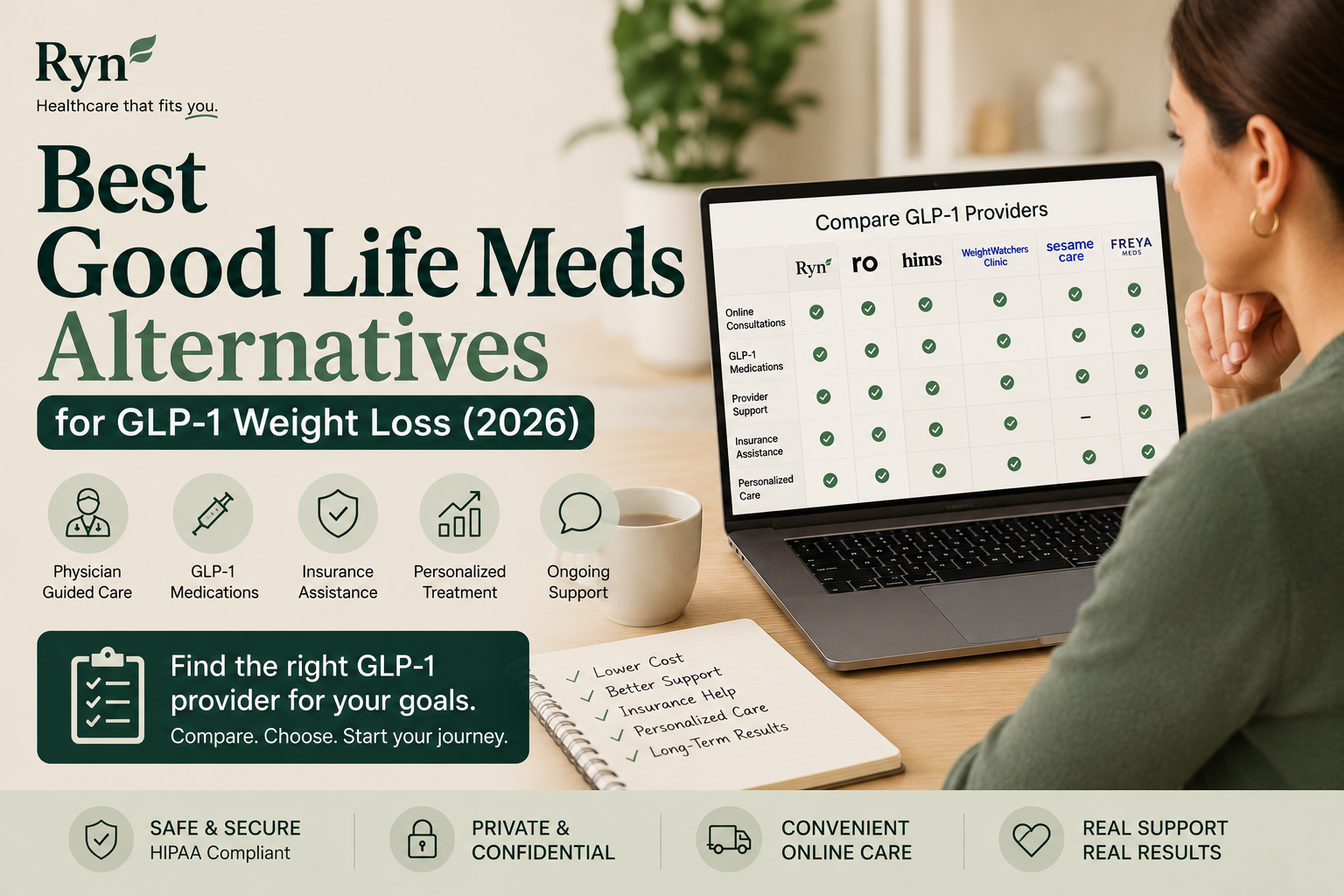
Best Good Life Meds Alternatives for GLP-1 Weight Loss (2026)
Compare the best Good Life Meds alternatives for GLP-1 weight loss, including Ryn, Ro, Hims, and other leading telehealth providers.