How to Qualify for GLP-1 Weight Loss Medication (2026 Guide) | Ryn
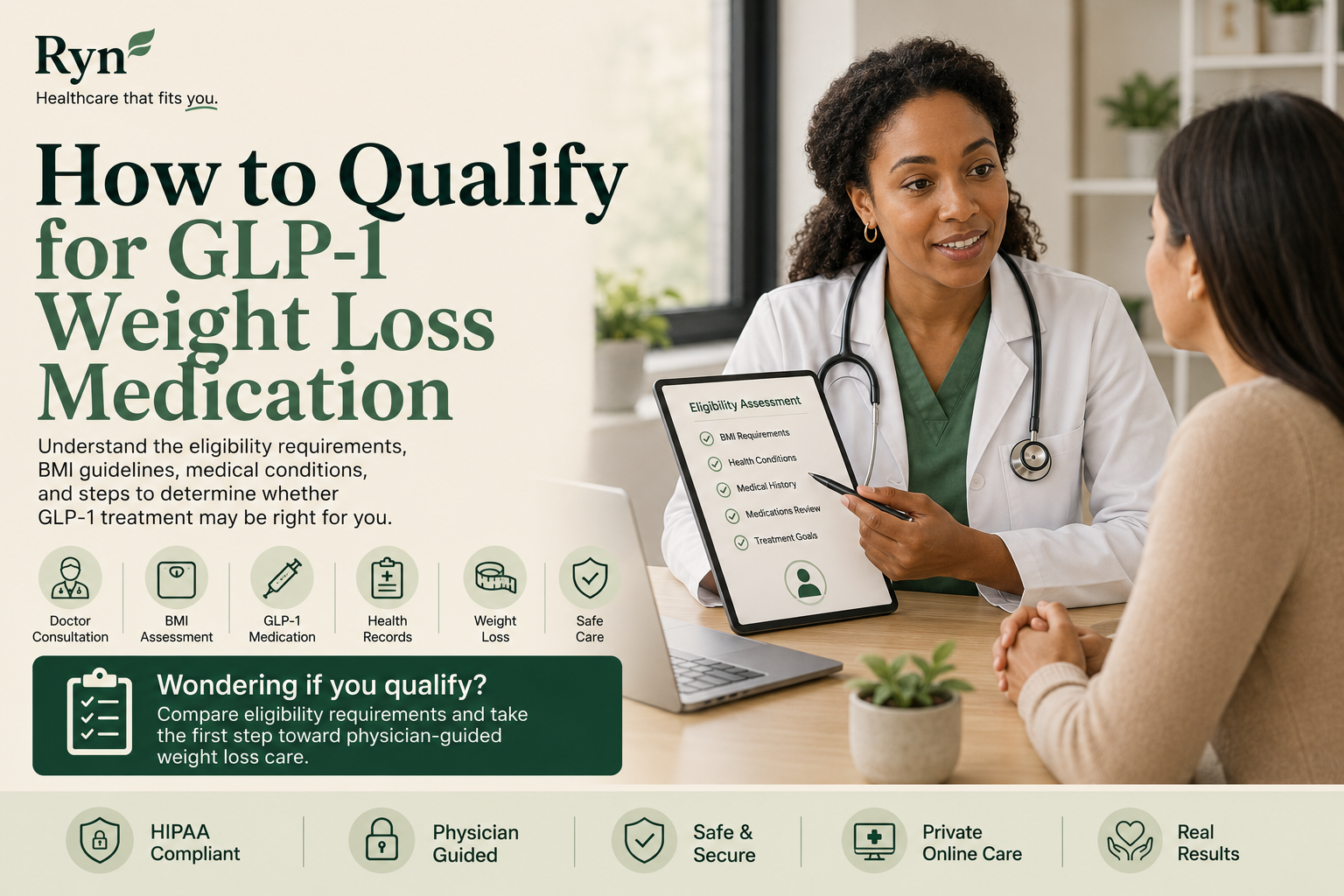
Wondering if you qualify for GLP-1 weight loss medication? Learn BMI requirements, eligibility guidelines, health conditions, and how to get evaluated online.
Introduction
GLP-1 medications have changed the way obesity and overweight are treated. Medications such as semaglutide and tirzepatide can help reduce appetite, improve blood sugar regulation, and support significant weight loss when combined with healthy lifestyle changes.
But one question comes up more than almost any other:
"Do I qualify for GLP-1 weight loss medication?"
The answer isn't always straightforward.
Unlike over-the-counter weight loss supplements, GLP-1 medications require a medical evaluation. Healthcare providers consider several factors before prescribing treatment, including your body mass index (BMI), medical history, existing health conditions, and previous weight loss efforts.
The good news is that qualifying for GLP-1 treatment is about much more than a number on the scale. Modern clinical guidelines recognize that obesity is a chronic medical condition, and many people who struggle to lose weight through diet and exercise alone may be appropriate candidates for physician-guided treatment.
If you're exploring options through an online provider, understanding these eligibility requirements can help you know what to expect before your consultation.
In this guide, you'll learn:
Who typically qualifies for GLP-1 weight loss medications
BMI and health requirements providers commonly use
Medical conditions that may affect eligibility
How online evaluations work
What happens if you don't initially qualify
How to prepare for your first consultation
If you're new to these medications, you may also find our What Are GLP-1 Medications?, Semaglutide for Weight Loss, and What Is Tirzepatide? helpful before continuing.
Quick Answer
Most adults qualify for GLP-1 weight loss medication if they have a BMI of 30 or higher, or a BMI of 27 or higher with at least one weight-related health condition such as high blood pressure, type 2 diabetes, high cholesterol, or obstructive sleep apnea.
A licensed healthcare provider will also review your medical history, current medications, previous weight loss efforts, and potential safety concerns before determining whether treatment is appropriate.
Why Providers Have Eligibility Requirements
Weight loss medications aren't designed for people who simply want to lose a few pounds before a vacation or special event.
Instead, they're intended to treat obesity or overweight when excess weight is affecting overall health or increasing the risk of future medical complications.
Healthcare providers follow evidence-based guidelines to ensure that the potential benefits outweigh the possible risks.
These medications can produce meaningful weight loss, but they also require ongoing monitoring, dose adjustments, and management of potential side effects. That's why a medical evaluation is an important part of the prescribing process.
Most providers assess several areas before making a recommendation:
Your current weight and BMI
Existing medical conditions
Family medical history
Current medications
Previous weight loss efforts
Lifestyle habits
Pregnancy status
Overall health goals
This comprehensive approach helps determine whether GLP-1 therapy is likely to be both safe and effective for you.
Understanding BMI Requirements
One of the first things providers evaluate is your Body Mass Index (BMI).
BMI is a screening tool that estimates whether your weight falls within a healthy range relative to your height.
Although BMI doesn't measure body fat directly, it's widely used by healthcare providers when evaluating treatment options for obesity.
Most Common Eligibility Guidelines
BMITypical EligibilityUnder 25Generally not eligible for GLP-1 weight loss treatment25–26.9Usually not eligible unless special circumstances exist27–29.9May qualify if another weight-related health condition is present30 or higherOften meets the BMI requirement for treatment
It's important to remember that BMI is only one part of the evaluation.
A provider may also consider your overall health, waist circumference, metabolic health, and individual risk factors when discussing treatment options.
What Health Conditions Can Help You Qualify?
If your BMI falls between 27 and 29.9, many providers look for additional medical conditions that increase the health risks associated with excess weight.
These are often called weight-related comorbidities.
Common examples include:
Type 2 diabetes
Prediabetes
High blood pressure
High cholesterol
Obstructive sleep apnea
Cardiovascular disease
Metabolic syndrome
Polycystic ovary syndrome (PCOS), in some cases
Osteoarthritis related to excess weight
These conditions can increase the long-term risk of serious health complications, making medical weight loss treatment a reasonable option for some patients.
For many individuals, losing even 5% to 10% of body weight may lead to meaningful improvements in blood pressure, blood sugar, cholesterol levels, and overall metabolic health.
Can You Qualify Without Diabetes?
Yes.
This is one of the biggest misconceptions surrounding GLP-1 medications.
While some GLP-1 drugs were originally developed to help manage type 2 diabetes, several are now also approved specifically for chronic weight management in eligible adults.
You do not need to have diabetes to qualify for weight loss treatment.
Many people prescribed GLP-1 medications have obesity or overweight with other health risks but normal blood sugar levels.
During your evaluation, your provider focuses on your complete health profile—not just whether you have diabetes.
What Happens During a GLP-1 Eligibility Assessment?
Whether you visit a clinic in person or complete an online consultation, the overall evaluation process is similar.
Your healthcare provider will gather information to determine whether treatment is appropriate and safe.
You'll typically answer questions about:
Your height and current weight
Medical history
Family history of obesity or diabetes
Current medications
Allergies
Previous weight loss programs
Eating habits
Physical activity
Pregnancy or family planning
Personal weight-loss goals
Some providers may also request recent laboratory results or recommend additional testing before prescribing medication.
Rather than looking at a single number, providers use all of this information to create an individualized treatment plan that aligns with your health needs.
Previous Weight Loss Attempts Matter
Most healthcare providers also want to understand what you've already tried.
This doesn't mean you have to prove you've followed a perfect diet for years.
Instead, providers generally want to know whether you've made reasonable lifestyle efforts without achieving sustainable, long-term results.
Examples include:
Structured nutrition plans
Increased physical activity
Behavioral weight management programs
Working with a dietitian
Previous prescription weight loss medications
For many people, repeated cycles of losing and regaining weight can indicate that additional medical support may be appropriate.
GLP-1 medications aren't intended to replace healthy habits—they're designed to work alongside them by helping reduce appetite, improve satiety, and support lasting behavior change.
``` ```html
Medical Reasons You May Not Qualify for GLP-1 Medication
GLP-1 medications can be helpful for many people, but they are not right for everyone.
A licensed provider may decide that GLP-1 treatment is not appropriate if you have certain medical risks or if another treatment option would be safer.
You may not qualify if you:
Are pregnant, trying to become pregnant, or breastfeeding
Have a personal or family history of medullary thyroid cancer
Have Multiple Endocrine Neoplasia syndrome type 2
Have a history of serious allergic reaction to GLP-1 medication
Have certain severe digestive disorders
Have a history of pancreatitis
Are taking medications that may create safety concerns
This does not always mean you can never use GLP-1 treatment. It means your provider needs to review your situation carefully before making a recommendation.
For some patients, the safest next step may be lab testing, a specialist referral, lifestyle treatment, or another prescription weight loss option.
What Labs or Medical Records May Be Needed?
Some online GLP-1 providers can begin with a medical intake form and virtual consultation. Others may request recent lab work before prescribing.
Common labs may include:
Not every patient needs the same testing. Your provider will decide what is appropriate based on your health history.
If you already have recent lab results from your primary care provider, you may be able to share them during your online evaluation.
Can You Qualify for GLP-1 Medication Online?
Yes, many patients can be evaluated for GLP-1 treatment through telehealth.
With an online GLP-1 prescription process, you typically complete a secure health intake, provide your height and weight, answer medical history questions, and connect with a licensed provider.
If the provider determines that treatment is appropriate, they may prescribe medication, recommend labs, or suggest another weight loss plan.
Online care can be helpful because it is private, convenient, physician-guided, and easier to start from home. It can also make follow-up support and dose monitoring simpler.
However, telehealth should still feel medical. A responsible provider should review your history, explain safety considerations, discuss side effects, and provide follow-up care.
You can learn more in our guide to Online GLP-1 Prescription and compare options in Best Online GLP-1 Clinics.
How to Improve Your Chances of Getting the Right Treatment Plan
Qualifying for GLP-1 treatment is not about saying the right thing. It is about giving your provider a clear, honest picture of your health.
Before your consultation, prepare:
Your current height and weight
Your weight history
Any health conditions
Current medications and supplements
Previous weight loss attempts
Recent lab results, if available
Your treatment goals
Any side effects or medication concerns
Being honest helps your provider decide whether GLP-1 medication is safe, whether another option may be better, and how your treatment should be monitored.
What If You Do Not Qualify?
Not qualifying for GLP-1 medication can feel frustrating, especially if you have been struggling with weight for a long time.
But it does not mean you are out of options.
Your provider may recommend:
Some people who do not qualify right away may become eligible later if new health information is available or if their provider identifies a weight-related condition that was not previously documented.
This is one reason a proper medical evaluation matters.
Do You Qualify? Simple GLP-1 Eligibility Checklist
This checklist is not a diagnosis or prescription. It is a simple way to understand whether you may be a candidate before speaking with a provider.
You may be a candidate if:
You are an adult
Your BMI is 30 or higher
Your BMI is 27 or higher with a weight-related health condition
You have struggled to lose weight through lifestyle changes alone
You are not pregnant or breastfeeding
You do not have major medical contraindications
You are willing to follow up with a provider during treatment
If several of these apply to you, it may be worth completing a physician-guided GLP-1 assessment.
Lead Magnet: Download the GLP-1 Eligibility Checker
Not sure whether you meet the common requirements?
Download the GLP-1 Eligibility Checker and use it to prepare for your consultation.
Inside the checklist, readers can track:
BMI range
Weight-related health conditions
Current medications
Previous weight loss attempts
Questions to ask a provider
Insurance and cost questions
Email capture idea: Use a Brevo form with the CTA: Download the Free GLP-1 Eligibility Checker.
After download, send a short nurture sequence covering how GLP-1 eligibility works, what providers look for before prescribing, semaglutide vs tirzepatide, insurance and cost questions, and an invitation to start a physician-guided consultation.
Related Reading
GLP-1 Basics
Starting Treatment
Results and Lifestyle
FAQ
Who qualifies for GLP-1 weight loss medication?
Most adults may qualify if they have a BMI of 30 or higher, or a BMI of 27 or higher with a weight-related health condition such as high blood pressure, type 2 diabetes, high cholesterol, or sleep apnea. A provider must still review your medical history before prescribing.
Can I get GLP-1 medication if I do not have diabetes?
Yes. Some GLP-1 medications are used for chronic weight management in people without diabetes. Eligibility depends on your BMI, health history, and provider evaluation.
What BMI do you need for GLP-1 medication?
Many providers use a BMI of 30 or higher, or 27 or higher with at least one weight-related condition. Your provider may also consider other medical factors.
Can I get GLP-1 medication online?
Yes. Licensed telehealth providers can evaluate patients online and determine whether GLP-1 treatment is appropriate. A proper online process should include a medical intake, provider review, and follow-up support.
What can stop me from qualifying?
Pregnancy, breastfeeding, certain thyroid cancer risks, serious allergic reactions, severe digestive conditions, pancreatitis history, or medication interactions may affect eligibility.
Do I need lab work before starting GLP-1 medication?
Sometimes. Some providers request lab work to review blood sugar, kidney function, liver function, cholesterol, or other health markers before prescribing.
What if my insurance does not cover GLP-1 medication?
You may still have options, including cash-pay programs, alternative medications, savings programs, or working with a provider to review prior authorization requirements.
Conclusion
Qualifying for GLP-1 weight loss medication usually depends on your BMI, health history, medical risk factors, and whether treatment is safe for you.
For many adults, the common starting point is a BMI of 30 or higher, or a BMI of 27 or higher with a weight-related health condition. But eligibility is not only about weight. A provider should also review your medical history, current medications, lab needs, goals, and long-term treatment plan.
If you are wondering whether GLP-1 treatment is right for you, the best next step is a physician-guided evaluation. That way, you can understand your options clearly and make a safe, informed decision about your weight loss care.
```
TryRyn — GLP-1, Hair Loss & Sexual Wellness Personalized telehealth for GLP-1 weight loss, hair restoration, and sexual wellness. Get prescribed online and delivered to your door.
Keep reading
Can You Stop Taking GLP-1? What Happens After You Stop | Ryn
Can you stop taking GLP-1 medication? Learn what happens after stopping semaglutide or tirzepatide, whether weight regain is common, and how to maintain your results safely.
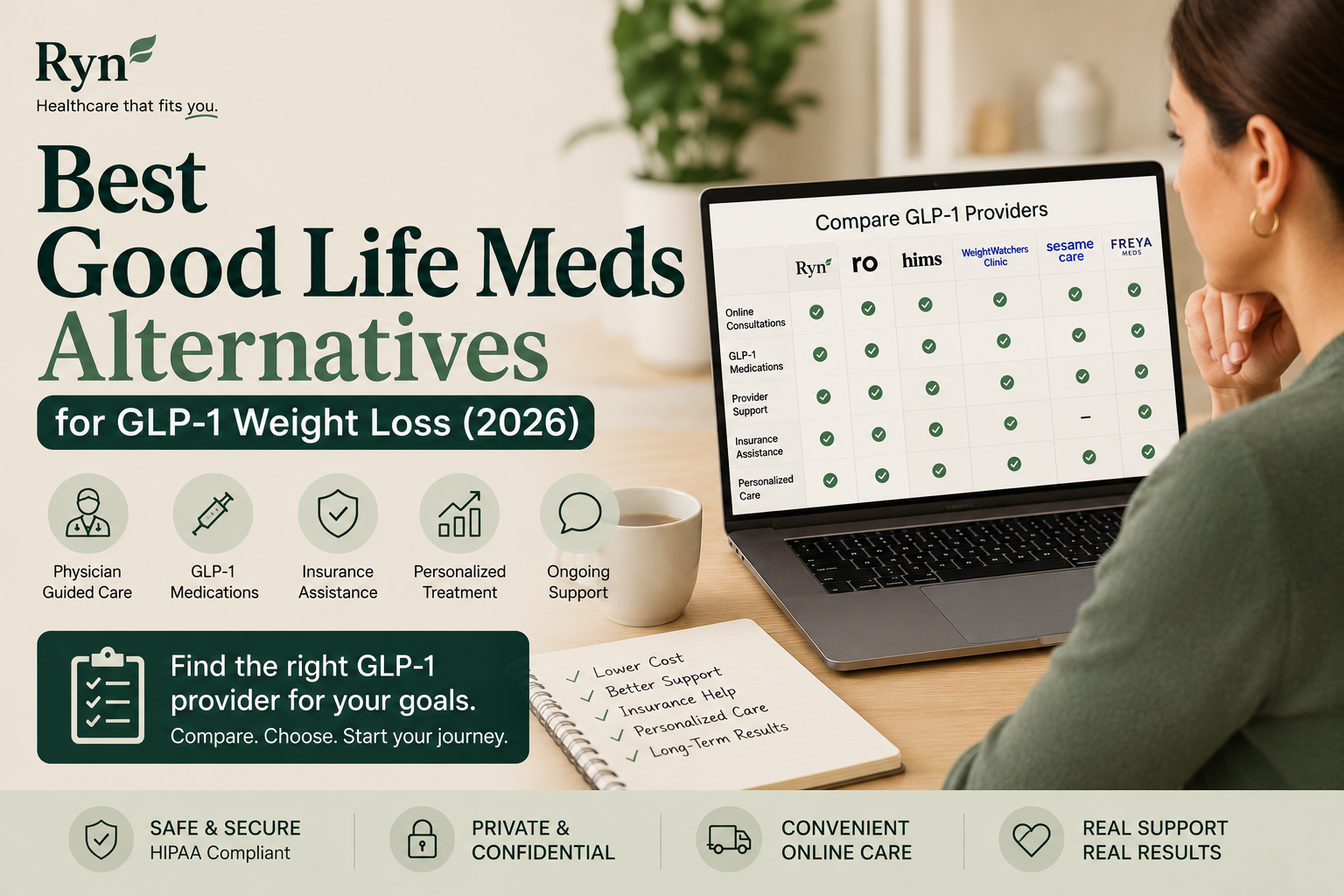
Best Good Life Meds Alternatives for GLP-1 Weight Loss (2026)
Compare the best Good Life Meds alternatives for GLP-1 weight loss, including Ryn, Ro, Hims, and other leading telehealth providers.
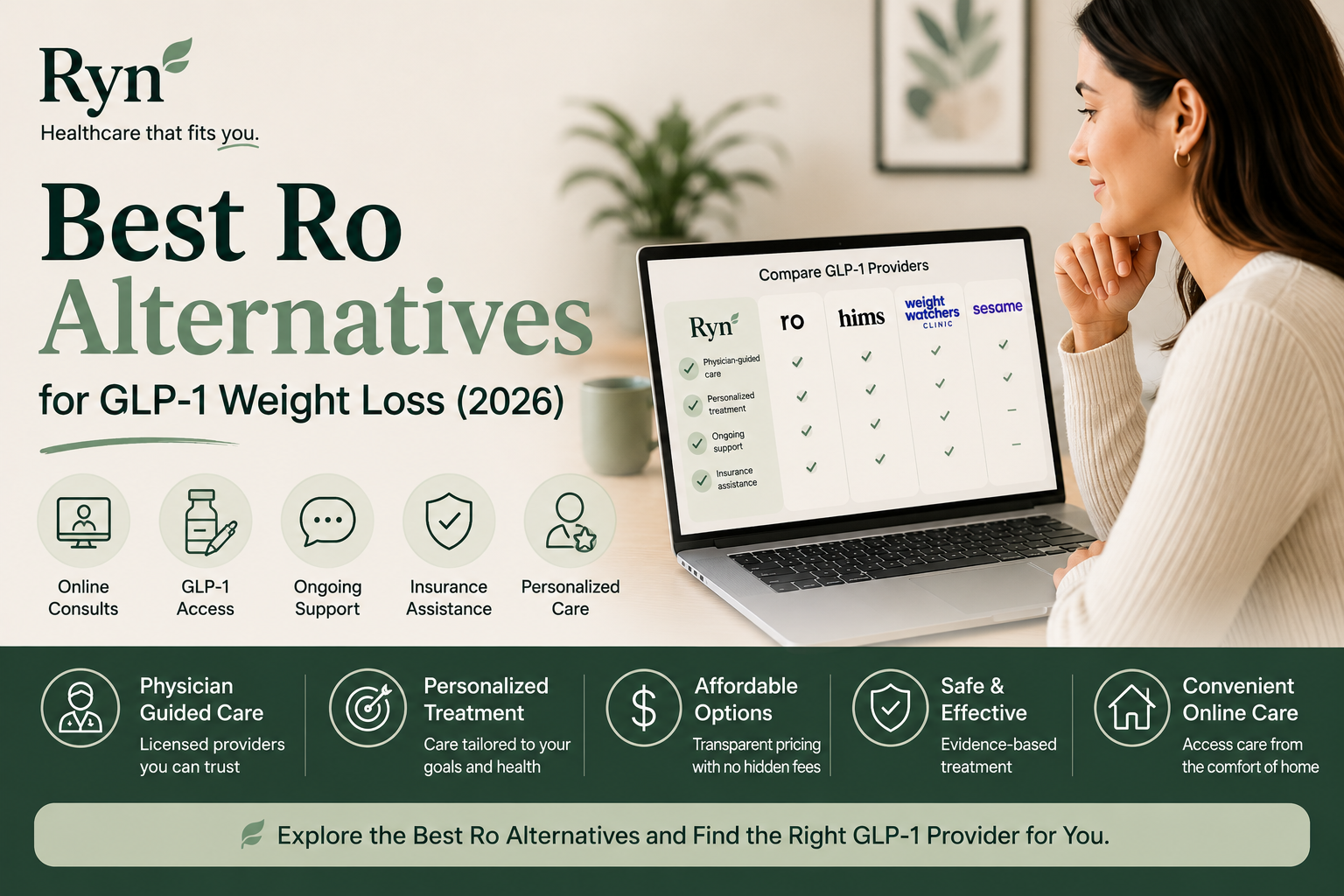
Best Ro Alternatives for GLP-1 Weight Loss (2026)
Compare the best Ro alternatives for GLP-1 weight loss, including Ryn, Hims, WeightWatchers Clinic, and other leading telehealth providers.