Tirzepatide vs Semaglutide: What's the Difference?
Compare Tirzepatide vs Semaglutide, including how they work, weight-loss benefits, side effects, and key differences to consider.
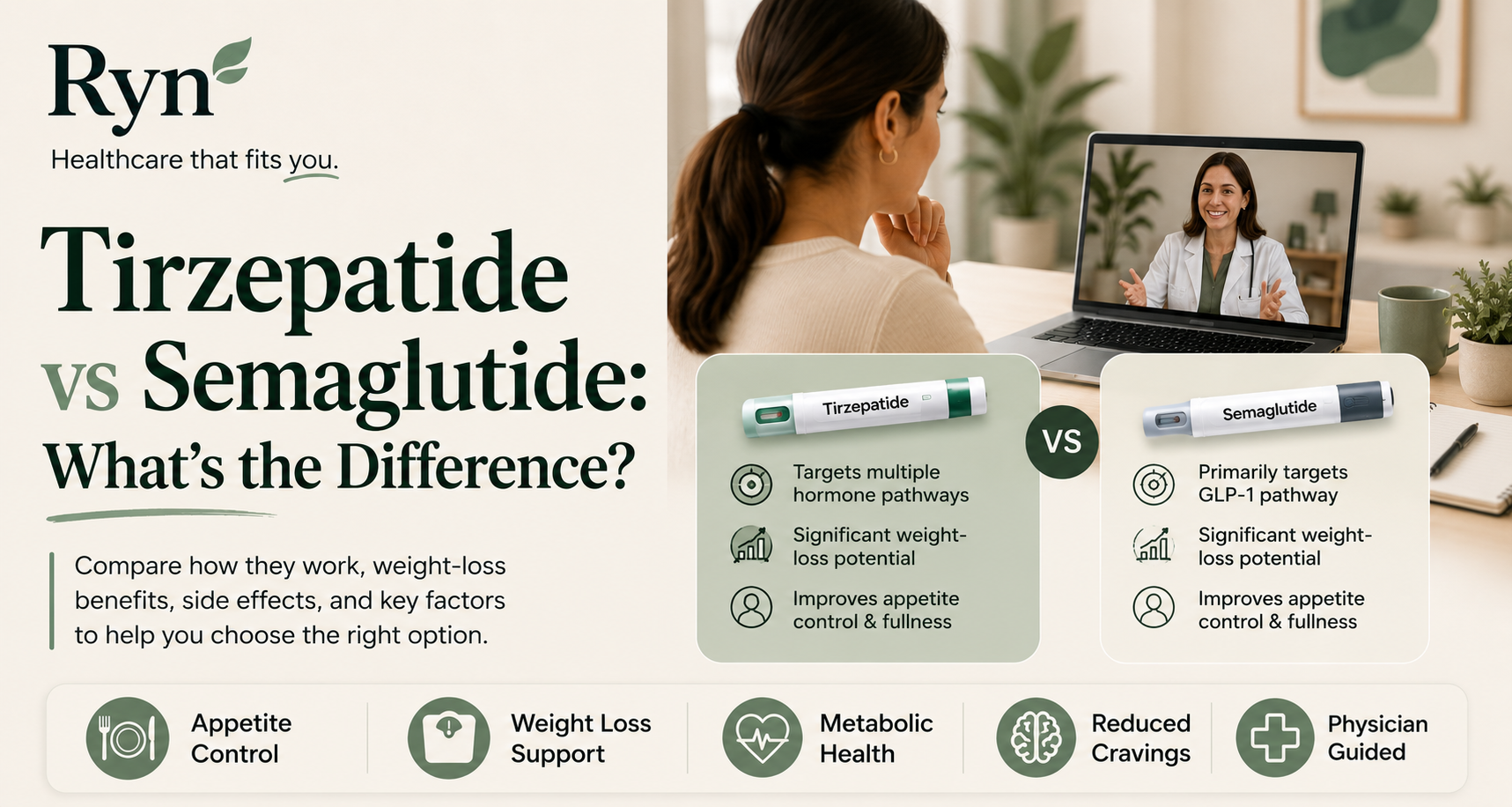
Tirzepatide vs Semaglutide: What's the Difference?
If you're researching medical weight-loss treatments, you've likely come across two names repeatedly: Tirzepatide and Semaglutide.
Both medications have become increasingly popular among patients seeking physician-guided support for weight management, appetite control, and metabolic health. As interest in GLP-1-based treatments continues to grow, many people want to understand how these medications compare and whether one may be a better fit for their individual goals.
At first glance, Tirzepatide and Semaglutide appear very similar. Both medications work by influencing hormones involved in hunger, fullness, and blood sugar regulation. Both have been associated with meaningful weight-loss results when combined with healthy lifestyle changes. And both are commonly discussed within telehealth weight-management programs.
However, there are important differences in how these medications work, their mechanisms of action, potential outcomes, and treatment considerations.
If you're new to this category of medications, we recommend first reading:
What Are GLP-1 Medications? A Complete Beginner's Guide
You may also find this helpful:
What Is Tirzepatide? A Complete Beginner's Guide
In this guide, we'll compare Tirzepatide and Semaglutide side-by-side, explain key differences, discuss potential benefits and side effects, and help you better understand the factors healthcare providers consider when recommending treatment.
Quick Answer
Tirzepatide and Semaglutide are both prescription medications used in physician-guided weight-management programs. Both help regulate appetite, improve feelings of fullness, and support weight loss. Tirzepatide targets multiple hormone pathways, while Semaglutide primarily targets the GLP-1 pathway. The right treatment depends on individual health needs, goals, medical history, and provider recommendations.
| Comparison Factor | Tirzepatide | Semaglutide |
|---|---|---|
| Medication Type | Prescription injectable | Prescription injectable |
| Appetite Control | Supports appetite regulation | Supports appetite regulation |
| Weight Loss Support | Significant weight-loss potential | Significant weight-loss potential |
| Hormone Pathways | Multiple pathways | Primarily GLP-1 pathway |
| Best Option | Depends on individual needs | Depends on individual needs |
What Is Semaglutide?
Semaglutide is one of the most widely recognized medications used in modern weight-management programs.
It works by mimicking a natural hormone involved in:
- Appetite regulation
- Hunger signals
- Fullness
- Blood sugar control
Many patients report:
- Reduced hunger
- Better portion control
- Fewer food cravings
- Improved consistency with healthy eating habits
Learn more here:
Semaglutide for Weight Loss: How It Works, Benefits & Safety Guide
What Is Tirzepatide?
Tirzepatide is a newer medication that works through multiple hormone pathways involved in appetite regulation and metabolic function.
Like Semaglutide, Tirzepatide may help patients:
- Feel fuller sooner
- Reduce food cravings
- Improve appetite control
- Support long-term weight management
Its multi-pathway approach is one of the primary differences between the two treatments.
What Is Tirzepatide? A Complete Beginner's Guide
How Are Tirzepatide and Semaglutide Similar?
Both medications share several important characteristics.
Appetite Reduction
Both medications help reduce hunger signals that can contribute to overeating.
Improved Fullness
Patients often feel satisfied after smaller meals.
Weight-Loss Support
When combined with healthy lifestyle habits, both medications may support meaningful weight-loss progress.
Physician-Guided Treatment
Both medications should be used under the supervision of a qualified healthcare provider.
Lifestyle Integration
Both work best when combined with:
- Healthy nutrition
- Physical activity
- Sleep optimization
- Long-term behavior changes
How Are Tirzepatide and Semaglutide Different?
While they share similarities, several differences distinguish the two medications.
Hormone Activity
Semaglutide primarily works through the GLP-1 pathway.
Tirzepatide influences multiple hormone pathways involved in appetite regulation and metabolic processes.
This difference is one reason healthcare providers may evaluate both options carefully when designing treatment plans.
Individual Response
Not every patient responds to medication in the same way.
Factors influencing results may include:
- Genetics
- Medical history
- Lifestyle habits
- Existing health conditions
- Treatment adherence
Side Effect Experience
Patients may experience side effects differently depending on the medication and individual tolerance.
Which Medication Produces Better Weight-Loss Results?
This is one of the most common questions patients ask.
The answer is not always straightforward.
Weight-loss outcomes depend on many factors including:
- Starting weight
- Lifestyle habits
- Physical activity
- Nutrition
- Sleep quality
- Medication adherence
Rather than focusing solely on comparisons, healthcare providers typically focus on identifying the most appropriate treatment for each individual's circumstances.
For realistic expectations, see:
GLP-1 Weight Loss Timeline: How Much Weight Can You Lose in 3 Months?
GLP-1 Before and After Results: Real Weight Loss Transformations
Common Side Effects
Like all medications, both Tirzepatide and Semaglutide may cause side effects.
Commonly reported side effects may include:
- Nausea
- Constipation
- Diarrhea
- Stomach discomfort
- Reduced appetite
Many side effects improve as treatment continues and the body adjusts.
Healthcare providers often use gradual dose increases to improve tolerability.
Helpful resources:
GLP-1 Nausea: Why It Happens and How to Manage It Effectively
Alcohol and GLP-1: Can You Drink While Taking GLP-1 Medication?
Does Semaglutide Cause Hair Loss? Causes, Prevention & What to Know
Is One Better Than the Other?
There is no universal answer.
The best treatment depends on factors such as:
- Individual health goals
- Medical history
- Weight-management needs
- Provider recommendations
- Treatment tolerance
A medication that works well for one person may not necessarily be the ideal option for another.
What Do Healthcare Providers Consider?
Before recommending treatment, providers often evaluate:
- Body Mass Index (BMI)
- Current weight
- Existing health conditions
- Medication history
- Previous weight-loss attempts
- Treatment goals
A comprehensive evaluation helps determine the most appropriate treatment strategy.
Trusted Medical Resources
According to leading health organizations, obesity and metabolic health involve complex biological processes that often require comprehensive treatment approaches.
For additional information, visit:
- National Institutes of Health (NIH)
- National Institute of Diabetes and Digestive and Kidney Diseases (NIDDK)
- American Diabetes Association (ADA)
- U.S. Food and Drug Administration (FDA)
Why More Patients Are Exploring Telehealth Weight Management
Telehealth has made it easier for patients to discuss treatment options from the comfort of home.
Benefits include:
- Online consultations
- Personalized treatment plans
- Ongoing support
- Convenient follow-up care
- Greater privacy
Many patients appreciate the flexibility that virtual care provides.
Lead Magnet Opportunity
Free GLP-1 Eligibility Checker
Not Sure Which Treatment May Be Right for You?
Take our free GLP-1 Eligibility Assessment to better understand your weight-loss treatment options and eligibility factors.
- Quick self-assessment
- Understand eligibility requirements
- Learn treatment basics
- Receive personalized educational insights
Related Reading
GLP-1 Foundation Articles
- What Are GLP-1 Medications? A Complete Beginner's Guide
- What Is Tirzepatide? A Complete Beginner's Guide
- Semaglutide for Weight Loss: How It Works, Benefits & Safety Guide
- How Long Does GLP-1 Take to Work? Timeline, Results & What to Expect
Weight Loss Results Articles
- GLP-1 Before and After Results: Real Weight Loss Transformations
- GLP-1 Weight Loss Timeline: How Much Weight Can You Lose in 3 Months?
- GLP-1 Weight Loss Plateau: How to Start Losing Weight Again
Lifestyle & Success Articles
- Best Foods on GLP-1 for Fat Loss
- Sleep and Weight Loss: How GLP-1 Affects Metabolism and Results
- Blood Sugar Health: Why Blood Sugar Balance Matters for Long-Term Wellness
Why Patients Choose Ryn
Ryn provides physician-guided care designed to help patients explore evidence-based weight-management solutions that fit their health goals, lifestyle, and long-term wellness objectives.
- Physician-guided treatment plans
- Personalized care recommendations
- Convenient online consultations
- Ongoing support and follow-up
- Privacy and discretion
- Evidence-based treatment options
Frequently Asked Questions
Is Tirzepatide the same as Semaglutide?
No. While both medications are used in physician-guided weight-management programs and share some similarities, they work differently within the body. Tirzepatide targets multiple hormone pathways, while Semaglutide primarily works through the GLP-1 pathway.
Which medication helps with appetite control?
Both Tirzepatide and Semaglutide may help reduce hunger, improve fullness, and support appetite regulation. Individual responses vary from person to person.
Which medication produces more weight loss?
Weight-loss results depend on many factors including treatment adherence, nutrition, activity levels, sleep quality, and individual biology. Healthcare providers evaluate these factors when discussing treatment options.
Are Tirzepatide and Semaglutide injections?
Both medications are commonly prescribed as injectable treatments within physician-guided programs.
Do I still need diet and exercise?
Yes. The best outcomes typically occur when treatment is combined with healthy nutrition, physical activity, quality sleep, stress management, and sustainable lifestyle habits.
How do I know which medication may be right for me?
A licensed healthcare provider can evaluate your medical history, health goals, current weight, BMI, and other factors to determine which treatment option may be most appropriate.
Conclusion
Tirzepatide and Semaglutide are two of the most widely discussed medications in modern weight management, and both have helped many patients pursue meaningful weight-loss goals under medical supervision.
While the medications share similarities in appetite regulation and weight-loss support, they differ in how they work within the body and how individual patients may respond to treatment. The best option depends on factors such as medical history, treatment goals, provider recommendations, and overall health needs.
If you're considering physician-guided weight-loss treatment, understanding the differences between Tirzepatide and Semaglutide is an important first step. A qualified healthcare provider can help evaluate your options and determine which approach may best support your long-term health and wellness goals.
TryRyn — GLP-1, Hair Loss & Sexual Wellness Personalized telehealth for GLP-1 weight loss, hair restoration, and sexual wellness. Get prescribed online and delivered to your door.
Keep reading

What Is Tirzepatide? A Complete Beginner's Guide
Learn what Tirzepatide is, how it works for weight loss, potential benefits, side effects, and who may be a candidate for treatment.

What Are GLP-1 Medications? A Complete Beginner's Guide
Learn what GLP-1 medications are, how they work, potential benefits, side effects, and who may be a candidate for weight loss treatment.

Hair Loss Treatment Options: What Works for Hair Thinning and Hair Loss
Explore hair loss treatment options and learn what may help with hair thinning. Discover how hormones, stress, nutrition, and wellness factors can affect hair health.