What Testosterone Level Is Considered Low? Explained
Learn what testosterone level is considered low, how providers interpret test results, common symptoms, and when to get tested.
What Testosterone Level Is Considered Low?
Testosterone is one of the most important hormones in the male body. It influences libido, erectile function, muscle mass, bone density, energy levels, mood, and overall wellbeing. Because testosterone affects so many aspects of health, many men become concerned when they experience symptoms such as fatigue, reduced sex drive, or difficulty maintaining muscle.
One of the most common questions men ask is: "What testosterone level is considered low?" While it may seem like a straightforward question, the answer is more complex than a single number.
Healthcare providers do not diagnose low testosterone based solely on laboratory results. Instead, they consider testosterone levels alongside symptoms, medical history, age, and overall health. Two men with identical testosterone levels may experience very different symptoms and require different approaches to care.
Understanding what constitutes low testosterone can help you better interpret test results and determine when it may be appropriate to speak with a healthcare provider.
In this guide, we'll explain what testosterone levels are considered low, how testosterone is measured, what symptoms may occur, and what factors healthcare providers evaluate when making a diagnosis.
Quick Answer
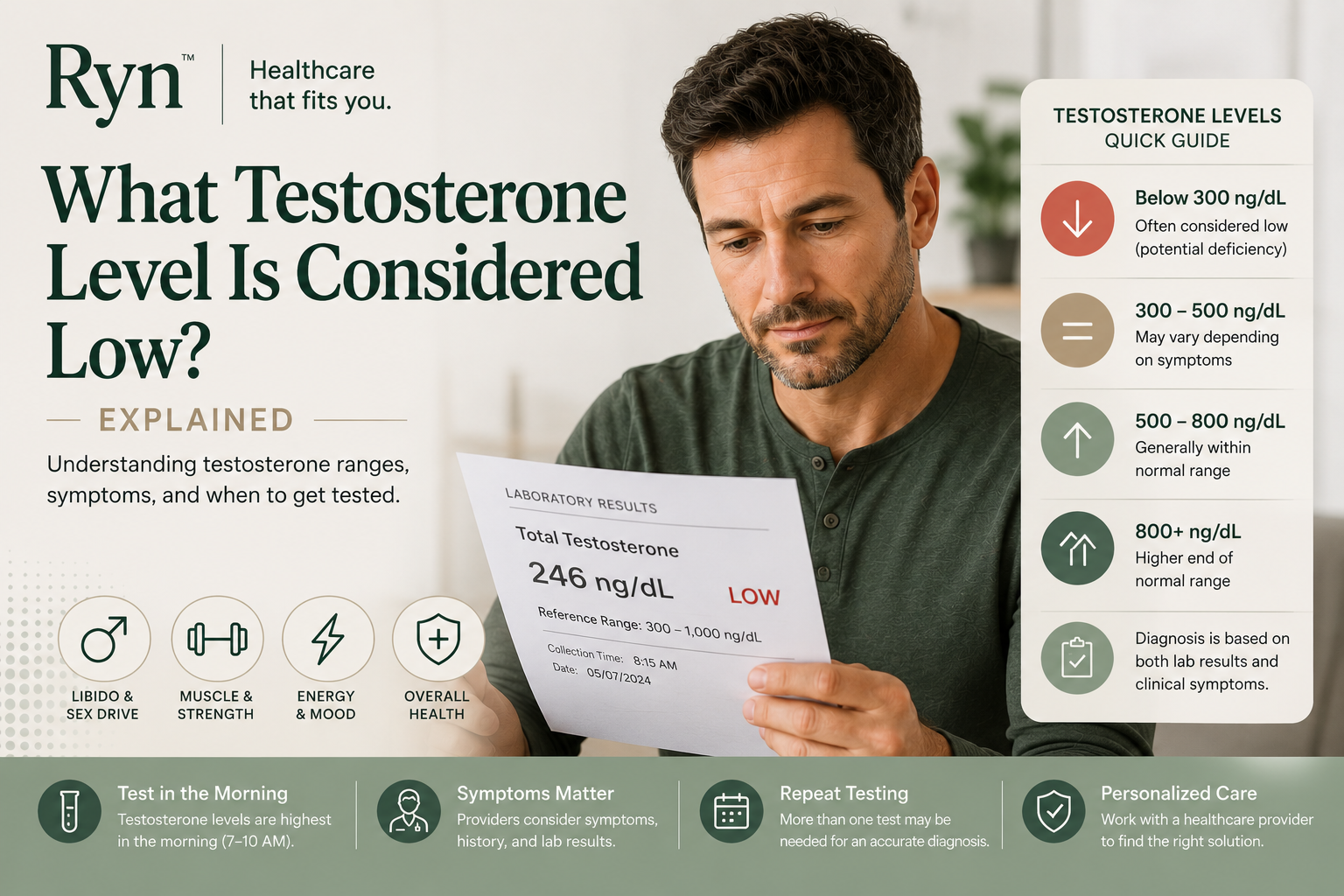
Many healthcare providers consider total testosterone levels below approximately 300 ng/dL to be low, particularly when symptoms are present. However, diagnosis is based on both laboratory results and clinical symptoms rather than a single number alone.
What Is Testosterone?
Testosterone is the primary male sex hormone.
Produced primarily in the testicles, testosterone helps regulate numerous functions throughout the body, including:
Sexual desire
Erectile function
Muscle growth
Bone strength
Mood
Energy production
Sperm production
Although testosterone is often associated with masculinity and sexual health, its effects extend far beyond the reproductive system.
Healthy testosterone levels contribute to overall physical and mental wellbeing.
How Testosterone Levels Are Measured
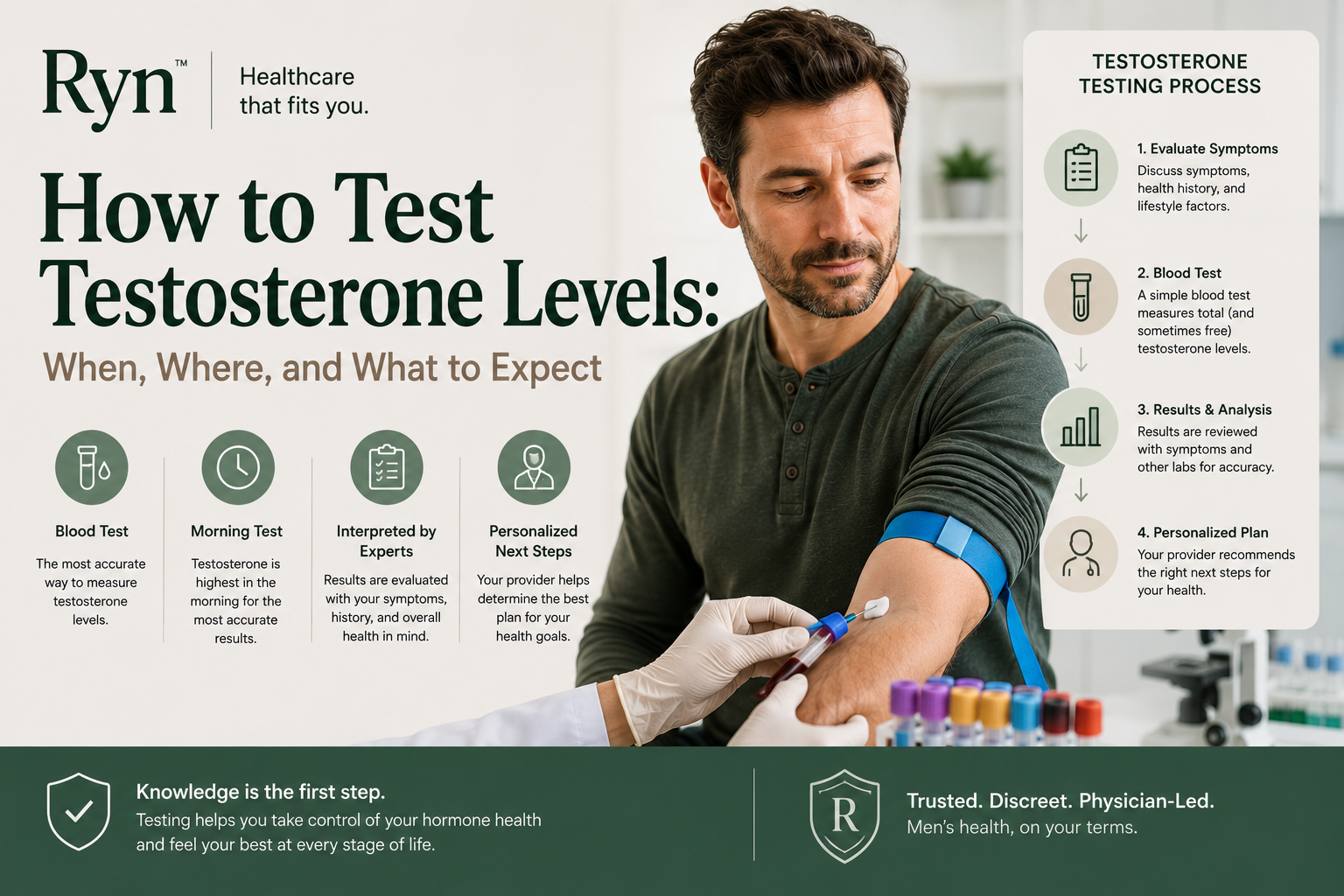
Testosterone is typically measured through a blood test.
Healthcare providers often begin with:
Total Testosterone
Total testosterone measures the overall amount of testosterone circulating in the bloodstream.
This includes testosterone that is:
Bound to proteins
Loosely attached to proteins
Freely available for use by the body's tissues
Because testosterone levels fluctuate throughout the day, testing is usually performed during the morning hours when levels tend to be highest.
In some situations, providers may also evaluate free testosterone levels for additional information.
Why Symptoms Matter
One of the biggest misconceptions about testosterone is that laboratory results alone determine whether someone has low testosterone.
In reality, symptoms play a critical role.
Healthcare providers often evaluate whether a patient is experiencing symptoms such as:
Reduced libido
Erectile dysfunction
Fatigue
Mood changes
Reduced motivation
Muscle loss
Increased body fat
Fewer morning erections
A man with mild symptoms and borderline laboratory results may require a different approach than someone experiencing significant symptoms and substantially lower hormone levels.
Common Signs of Low Testosterone
Low testosterone can affect multiple areas of health simultaneously.
Common symptoms may include:
Sexual Symptoms
Reduced libido
Lower sexual satisfaction
Erectile dysfunction
Fewer spontaneous erections
Physical Symptoms
Fatigue
Reduced energy
Difficulty building muscle
Increased body fat
Reduced exercise performance
Emotional Symptoms
Irritability
Reduced motivation
Mild depression
Difficulty concentrating
Because these symptoms overlap with other medical conditions, proper testing and evaluation are important.
Does Age Affect Testosterone Levels?
Yes.
Testosterone levels naturally decline as men age.
While the rate varies between individuals, gradual reductions are considered a normal part of aging.
However, significant symptoms are not automatically considered a normal consequence of getting older.
Healthcare providers evaluate whether symptoms may be related to hormone levels, underlying medical conditions, lifestyle factors, or a combination of factors.
Can You Have Normal Testosterone and Still Feel Symptoms?
Yes.
Some men experience symptoms commonly associated with low testosterone even when laboratory results fall within normal ranges.
This is one reason healthcare providers take a comprehensive approach when evaluating symptoms.
Factors that may influence wellbeing include:
Sleep quality
Stress
Nutrition
Physical activity
Cardiovascular health
Mental health
Addressing these factors may sometimes improve symptoms even when testosterone levels are normal.
How Lifestyle Factors Affect Testosterone
Several lifestyle factors can influence hormone health.
Strategies that may support healthy testosterone levels include:
Regular exercise
Strength training
Adequate sleep
Stress management
Maintaining a healthy body fat percentage
Balanced nutrition
These habits can support overall wellbeing and may contribute to healthier hormone function over time.
Explore Treatment Options
For men experiencing erectile dysfunction or sexual performance concerns, physician-guided treatment can help identify potential causes and appropriate solutions.
Sildenafil (Generic Viagra®)
https://www.tryryn.com/products/sildenafil-generic-viagra
Sildenafil helps improve blood flow and is one of the most commonly prescribed treatments for erectile dysfunction.
Tadalafil (Generic Cialis®)
https://www.tryryn.com/products/tadalafil-generic-cialis
Tadalafil offers a longer duration of action and may provide greater flexibility for some patients.
A healthcare provider can help determine whether symptoms may be related to hormone levels, circulation, lifestyle factors, or another health condition.
Related Reading
Signs of Low Testosterone in Men
How to Test Testosterone Levels
Testosterone and Libido: Understanding the Connection
Can Low Testosterone Cause ED?
Testosterone and Erectile Dysfunction: What's the Connection?
Best Vitamins for Testosterone Support
Does Shilajit Increase Testosterone?
Healthy Male Body Fat Percentage
Why More Men Are Choosing Telehealth
Telehealth has made it easier than ever for men to discuss hormone health and sexual wellness concerns with licensed healthcare providers.
Benefits include:
Greater privacy
Convenient online consultations
Access to licensed healthcare providers
Treatment from home
Ongoing support
Many men appreciate the convenience and discretion telehealth offers when discussing sensitive health concerns.
Learn more about telehealth through the U.S. Department of Health and Human Services:
Frequently Asked Questions
What testosterone level is considered low?
Many healthcare providers consider total testosterone levels below approximately 300 ng/dL to be low when symptoms are present.
Can you have low testosterone symptoms with normal levels?
Yes. Symptoms can sometimes occur even when laboratory results fall within normal ranges.
Is one testosterone test enough?
Not always. Healthcare providers may recommend repeat testing if results are abnormal or unclear.
Does testosterone naturally decline with age?
Yes. Testosterone levels generally decrease gradually as men get older.
Should I get tested if I have symptoms?
If you're experiencing symptoms such as fatigue, low libido, or erectile dysfunction, discussing testing with a healthcare provider may be beneficial.
Why Patients Choose Ryn
Ryn provides physician-guided care designed to help men address erectile dysfunction and related sexual health concerns with privacy, convenience, and evidence-based treatment options.
Physician-guided treatment plans
Convenient online consultations
Discreet care and delivery
Trusted treatment options
Ongoing support
Explore available treatments:
Sildenafil (Generic Viagra®)
https://www.tryryn.com/products/sildenafil-generic-viagra
Tadalafil (Generic Cialis®)
https://www.tryryn.com/products/tadalafil-generic-cialis
Conclusion
Determining whether testosterone levels are low involves more than looking at a single laboratory result. Healthcare providers evaluate testosterone levels alongside symptoms, medical history, and overall health to gain a complete picture.
If you're experiencing symptoms such as reduced libido, fatigue, mood changes, or erectile dysfunction, speaking with a healthcare provider and considering testosterone testing may help identify the underlying cause.
Understanding your hormone health is an important step toward making informed decisions about your wellbeing and long-term health.
TryRyn — GLP-1, Hair Loss & Sexual Wellness Personalized telehealth for GLP-1 weight loss, hair restoration, and sexual wellness. Get prescribed online and delivered to your door.
Keep reading

Can Weight Loss Increase Testosterone? What Research Shows
Learn how weight loss may affect testosterone levels, libido, body fat, and overall hormone health in men.

Can Vitamins Boost Testosterone? Top Nutrients for Men
Learn which vitamins may support healthy testosterone levels, how deficiencies affect hormone health, and what science reveals.
How to Test Testosterone Levels: When, Where & What to Expect
Learn how to test testosterone levels, when testing should be done, what the results mean, and when to speak with a healthcare provider.