Testosterone and Libido: Understanding the Connection
Learn how testosterone affects libido, common causes of low sex drive, and when low testosterone may contribute to reduced sexual desire.

Testosterone and Libido: Understanding the Connection
Libido, often referred to as sex drive or sexual desire, is influenced by a complex combination of physical, emotional, psychological, and hormonal factors. Among these factors, testosterone is one of the most discussed hormones because of its significant role in male sexual health.
Many men who experience a reduced interest in sex wonder whether low testosterone may be responsible. Others assume that increasing testosterone automatically leads to a stronger libido. While testosterone and libido are closely connected, the relationship is more nuanced than many people realize.
Sexual desire is not controlled by testosterone alone. Sleep quality, stress levels, mental health, relationship satisfaction, physical health, medications, and lifestyle habits can all influence libido. This is why some men with normal testosterone levels experience low sex drive, while others with lower testosterone levels may not notice significant changes in sexual desire.
Understanding how testosterone affects libido can help men better recognize potential symptoms, determine when testing may be appropriate, and identify strategies that support overall sexual wellness.
In this guide, we'll explore the connection between testosterone and libido, common causes of low sex drive, and when it may be beneficial to speak with a healthcare provider.
Quick Answer
Testosterone plays an important role in male libido, and low testosterone levels can contribute to reduced sexual desire in some men. However, libido is influenced by many factors beyond hormone levels, including stress, sleep, physical health, medications, and emotional wellbeing.
| Factor | Impact on Libido |
|---|---|
| Testosterone Levels | Can influence sexual desire |
| Sleep Quality | Supports hormone production and libido |
| Stress | May reduce sexual desire |
| Physical Health | Can affect energy and sexual function |
| Mental Wellbeing | Influences sexual interest and satisfaction |
What Is Libido?
Libido refers to a person's interest in sexual activity.
Sex drive varies naturally between individuals and can fluctuate throughout life based on numerous biological and psychological factors.
A healthy libido does not look the same for everyone.
Some men naturally experience a higher level of sexual desire, while others may have a lower but completely normal level of interest in sex.
Problems typically arise when there is a noticeable change from an individual's usual level of desire or when reduced libido begins affecting quality of life or relationships.
What Role Does Testosterone Play?
Testosterone is the primary male sex hormone and plays a significant role in reproductive and sexual health.
The hormone contributes to:
- Sexual desire
- Erectile function
- Sperm production
- Energy levels
- Muscle development
- Bone strength
- Mood regulation
Because testosterone helps regulate sexual desire, low levels may contribute to a reduction in libido for some men.
However, testosterone is only one piece of a much larger picture.
How Low Testosterone Can Affect Libido
Men with low testosterone may experience:
- Reduced sexual thoughts
- Lower interest in sexual activity
- Decreased motivation for intimacy
- Reduced sexual satisfaction
These changes may occur gradually over time, making them difficult to recognize initially.
In some cases, reduced libido may be one of the earliest symptoms of low testosterone.
Other symptoms often occur alongside changes in sexual desire.
Common accompanying symptoms include:
- Fatigue
- Mood changes
- Difficulty building muscle
- Increased body fat
- Reduced exercise performance
- Erectile dysfunction
Because these symptoms overlap with many other health conditions, professional evaluation is often necessary.
Can You Have Low Libido With Normal Testosterone?
Yes.
This is one of the most important concepts to understand.
Many men assume low libido automatically means low testosterone.
In reality, sexual desire is influenced by numerous factors.
A man may have completely normal testosterone levels and still experience reduced libido due to:
- Chronic stress
- Anxiety
- Depression
- Relationship difficulties
- Sleep deprivation
- Medication side effects
- Excessive alcohol consumption
- Chronic illness
This is why healthcare providers evaluate the whole person rather than focusing solely on hormone levels.
The Connection Between Sleep and Testosterone
Sleep plays a major role in hormone production.
Testosterone levels are influenced by both sleep quantity and sleep quality.
Poor sleep has been associated with:
- Reduced testosterone production
- Increased fatigue
- Lower energy levels
- Reduced libido
Men who consistently sleep fewer hours than recommended may notice changes in sexual desire and overall wellbeing.
Improving sleep habits is often one of the first lifestyle strategies recommended for supporting hormone health.
Stress, Cortisol, and Sexual Desire
Stress can significantly affect libido.
When stress levels rise, the body produces more cortisol, a hormone involved in the stress response.
Chronically elevated cortisol may contribute to:
- Reduced sexual interest
- Fatigue
- Mood changes
- Reduced overall wellbeing
Work pressures, financial concerns, family responsibilities, and health issues can all affect stress levels and sexual desire.
Stress management techniques may help support both mental health and sexual wellness.
Testosterone and Erectile Dysfunction
Although testosterone and erectile dysfunction are often discussed together, they are not the same thing.
Libido refers to sexual desire.
Erectile dysfunction refers to difficulty achieving or maintaining an erection.
Some men with low testosterone experience both reduced libido and erectile dysfunction.
However, many men with erectile dysfunction have normal testosterone levels.
Because erections depend heavily on healthy blood flow, cardiovascular health, nerve function, and psychological wellbeing also play important roles.
Understanding this distinction is essential when evaluating symptoms.
Lifestyle Habits That May Support Healthy Libido
Several lifestyle factors can help support sexual health and overall wellbeing.
These include:
Regular Exercise
Physical activity supports cardiovascular health, energy levels, and hormone balance.
Strength Training
Resistance exercise may support healthy testosterone levels and body composition.
Quality Sleep
Adequate sleep supports hormone production and recovery.
Healthy Body Weight
Maintaining a healthy body fat percentage may support hormone health.
Stress Management
Reducing chronic stress may positively affect libido and overall wellbeing.
Together, these habits often provide significant benefits for sexual health.
When Should You Consider Testosterone Testing?
Testing may be worth discussing with a healthcare provider if you experience:
- Persistent low libido
- Fatigue
- Reduced motivation
- Mood changes
- Erectile dysfunction
- Difficulty building muscle
- Increased body fat
Healthcare providers typically use blood testing along with symptom evaluation when assessing testosterone health.
Understanding hormone levels can help determine whether testosterone may be contributing to symptoms.
Explore Treatment Options
For men experiencing erectile dysfunction or sexual performance concerns, physician-guided treatment can help identify potential causes and appropriate solutions.
Sildenafil (Generic Viagra®)
https://www.tryryn.com/products/sildenafil-generic-viagra
Sildenafil helps improve blood flow and is one of the most commonly prescribed treatments for erectile dysfunction.
Tadalafil (Generic Cialis®)
https://www.tryryn.com/products/tadalafil-generic-cialis
Tadalafil offers a longer duration of action and may provide greater flexibility for some patients.
A healthcare provider can help determine whether symptoms may be related to hormone levels, circulation, lifestyle factors, or another health condition.
Related Reading
- Signs of Low Testosterone in Men
- What Testosterone Level Is Considered Low?
- How to Test Testosterone Levels
- Can Low Testosterone Cause ED?
- Testosterone and Erectile Dysfunction: What's the Connection?
- Best Vitamins for Testosterone Support
- Can Weight Loss Increase Testosterone?
- Healthy Male Body Fat Percentage
- Does Shilajit Increase Testosterone?
Why More Men Are Choosing Telehealth
Telehealth has made it easier than ever for men to discuss hormone health and sexual wellness concerns with licensed healthcare providers.
Benefits include:
- Greater privacy
- Convenient online consultations
- Access to licensed healthcare providers
- Treatment from home
- Ongoing support
Many men appreciate the convenience and discretion telehealth offers when discussing sensitive health concerns.
Learn more about telehealth through the U.S. Department of Health and Human Services:
Frequently Asked Questions
Does testosterone increase libido?
Testosterone plays an important role in sexual desire. Men with low testosterone may experience reduced libido, although libido is influenced by many factors beyond hormone levels.
Can you have low libido with normal testosterone?
Yes. Stress, sleep problems, mental health conditions, medications, and relationship issues can all contribute to reduced sexual desire even when testosterone levels are normal.
Does low testosterone always cause erectile dysfunction?
No. While low testosterone can contribute to erectile dysfunction in some men, many cases of ED are related to blood flow, cardiovascular health, psychological factors, or other medical conditions.
How do I know if my low libido is caused by testosterone?
The only way to determine whether testosterone may be contributing to symptoms is through proper evaluation, including symptom assessment and blood testing.
Can lifestyle changes improve libido?
Yes. Regular exercise, better sleep, stress management, healthy nutrition, and maintaining a healthy body weight may all help support sexual health and libido.
Lead Magnet Opportunity
Free Testosterone Symptom Checker
This article is an ideal location to promote Ryn's Testosterone Symptom Checker.
Could Low Testosterone Be Affecting Your Libido?
Take our free Testosterone Symptom Checker to better understand the symptoms healthcare providers look for and discover whether it may be worth discussing testing with a medical professional.
- Quick self-assessment
- Understand common symptoms
- Learn when testing may be appropriate
- Personalized educational insights
Why Patients Choose Ryn
Ryn provides physician-guided care designed to help men address erectile dysfunction and related sexual health concerns with privacy, convenience, and evidence-based treatment options.
- Physician-guided treatment plans
- Convenient online consultations
- Discreet care and delivery
- Trusted treatment options
- Ongoing support
Explore available treatments:
Sildenafil (Generic Viagra®)
https://www.tryryn.com/products/sildenafil-generic-viagra
Tadalafil (Generic Cialis®)
https://www.tryryn.com/products/tadalafil-generic-cialis
Internal Linking Strategy
This article should internally link to:
Higher Intent Articles
- Can Low Testosterone Cause ED?
- What Testosterone Level Is Considered Low?
- How to Test Testosterone Levels
Supporting Educational Articles
- Signs of Low Testosterone in Men
- Best Vitamins for Testosterone Support
- Can Weight Loss Increase Testosterone?
- Healthy Male Body Fat Percentage
- Does Shilajit Increase Testosterone?
Treatment-Focused Articles
- Sildenafil Side Effects: What You Should Know
- Can You Take Sildenafil Every Day?
- Sildenafil vs Viagra
- Tadalafil vs Cialis
This positioning helps establish the article as a cornerstone piece within Ryn's Testosterone SEO cluster while creating logical pathways toward treatment-related content.
Conclusion
Testosterone and libido are closely connected, but sexual desire is influenced by much more than hormone levels alone. While low testosterone can contribute to reduced libido, factors such as sleep quality, stress, mental wellbeing, physical health, and lifestyle habits all play important roles.
Understanding this relationship can help men make informed decisions about their health and recognize when professional evaluation may be beneficial. If you're experiencing persistent changes in libido, fatigue, mood changes, or erectile dysfunction, discussing your symptoms with a healthcare provider may help identify the underlying cause and determine the most appropriate next steps.
Supporting overall health through healthy lifestyle habits, proper medical evaluation, and evidence-based care can play an important role in maintaining sexual wellness and quality of life.
TryRyn — GLP-1, Hair Loss & Sexual Wellness Personalized telehealth for GLP-1 weight loss, hair restoration, and sexual wellness. Get prescribed online and delivered to your door.
Keep reading
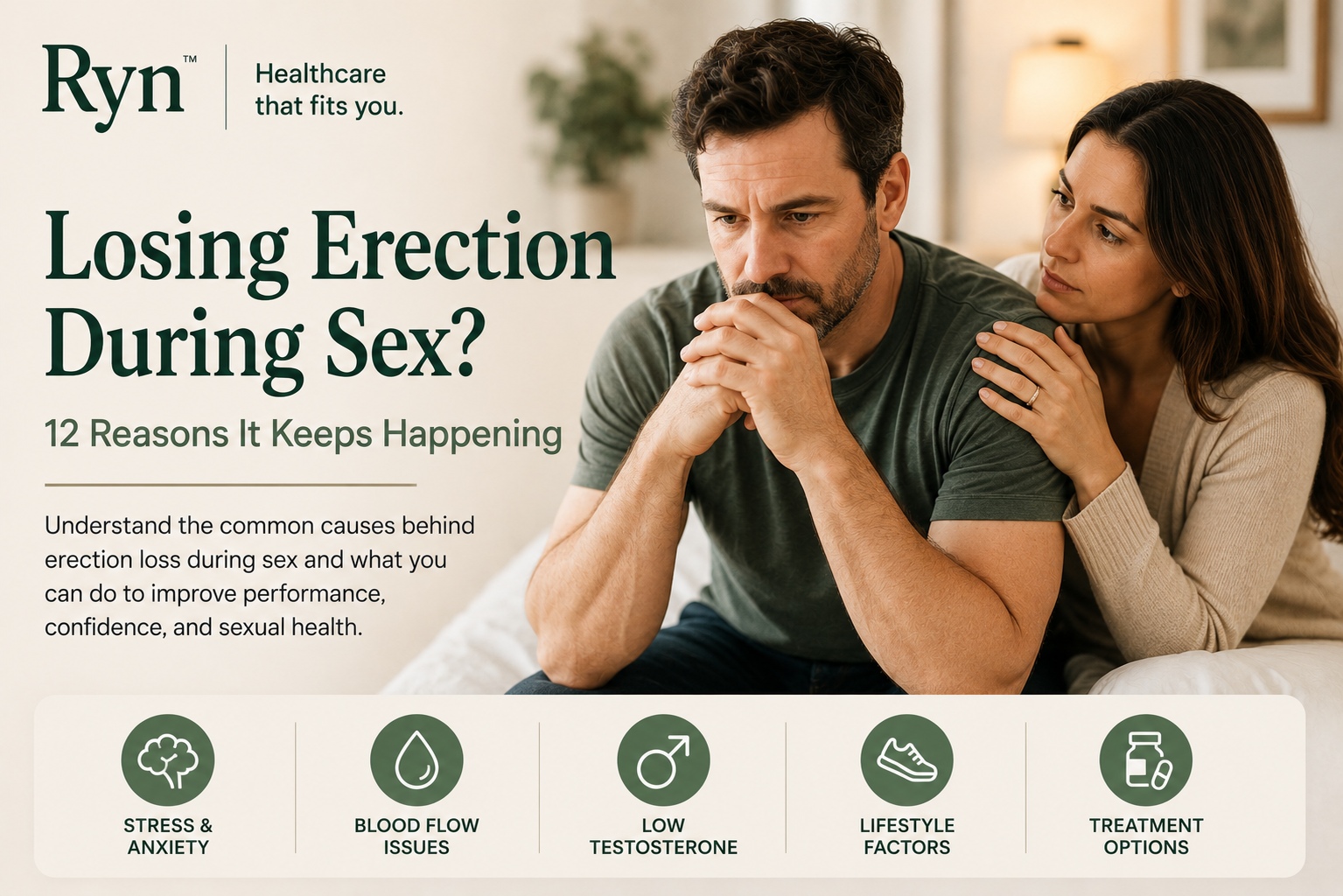
Losing Erection During Sex: 12 Reasons It Keeps Happening
Learn 12 common reasons men lose erections during sex, including stress, anxiety, low testosterone, ED, and treatment options.
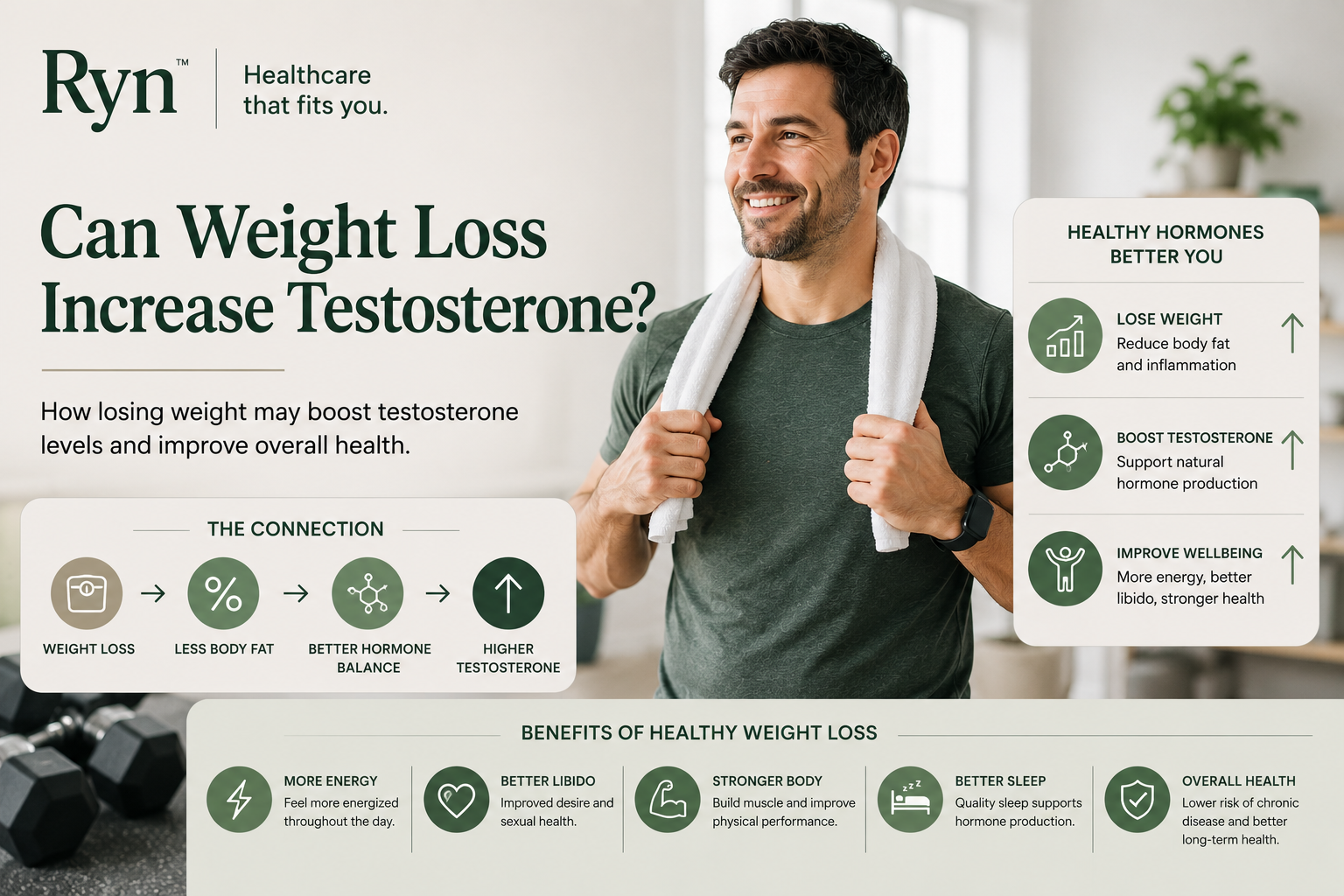
Can Weight Loss Increase Testosterone? What Research Shows
Learn how weight loss may affect testosterone levels, libido, body fat, and overall hormone health in men.
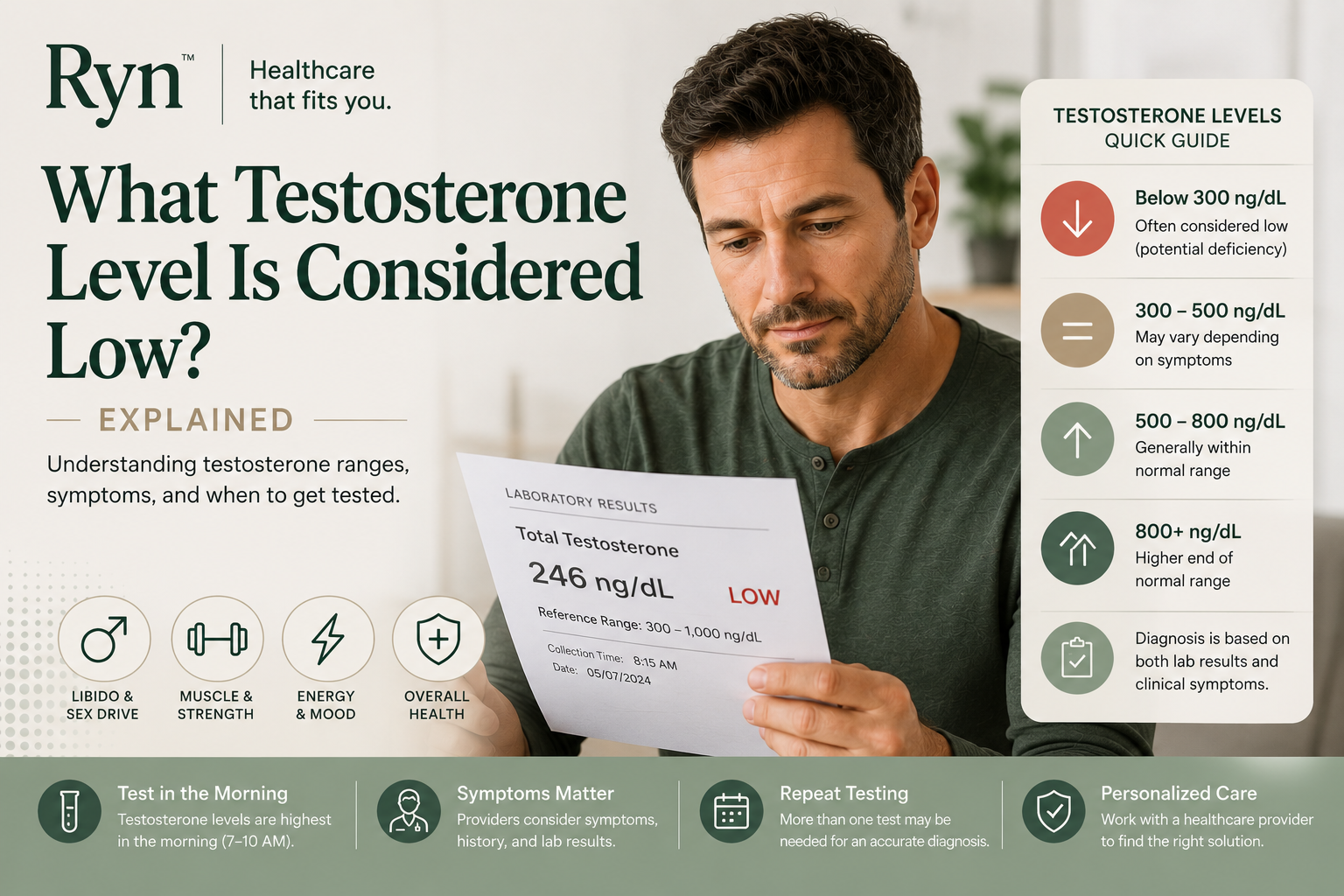
What Testosterone Level Is Considered Low? Explained
Learn what testosterone level is considered low, how providers interpret test results, common symptoms, and when to get tested.